
← All blog articles · Chores for Kids topic hub
Quick answer: The kids who do chores study that keeps going viral is usually described as a study of Harvard graduates. The paper it most likely traces to is a 1981 Harvard Study of Adult Development analysis of 456 men who grew up in inner-city Boston. It rated boyhood work broadly, not chores alone. Newer studies link chores to self-rated competence and some thinking skills, but all are correlational.
Key takeaways
- The “Harvard study” most likely traces back to Vaillant and Vaillant (1981): inner-city Boston men, not Harvard students, and a broad rating of boyhood work, not a chores experiment.
- The “start chores at age 3 or 4” claim is widely shared, but we could find no peer-reviewed paper reporting it.
- In 9,971 US children, more frequent kindergarten chores went with modestly higher self-rated competence in third grade (White and colleagues, 2019).
- Self-care and family-care chores, not pet care, were linked to working memory and inhibition (Tepper and colleagues, 2022), but a six-year study of 674 youth found no link with self-control (Damian and colleagues, 2020).
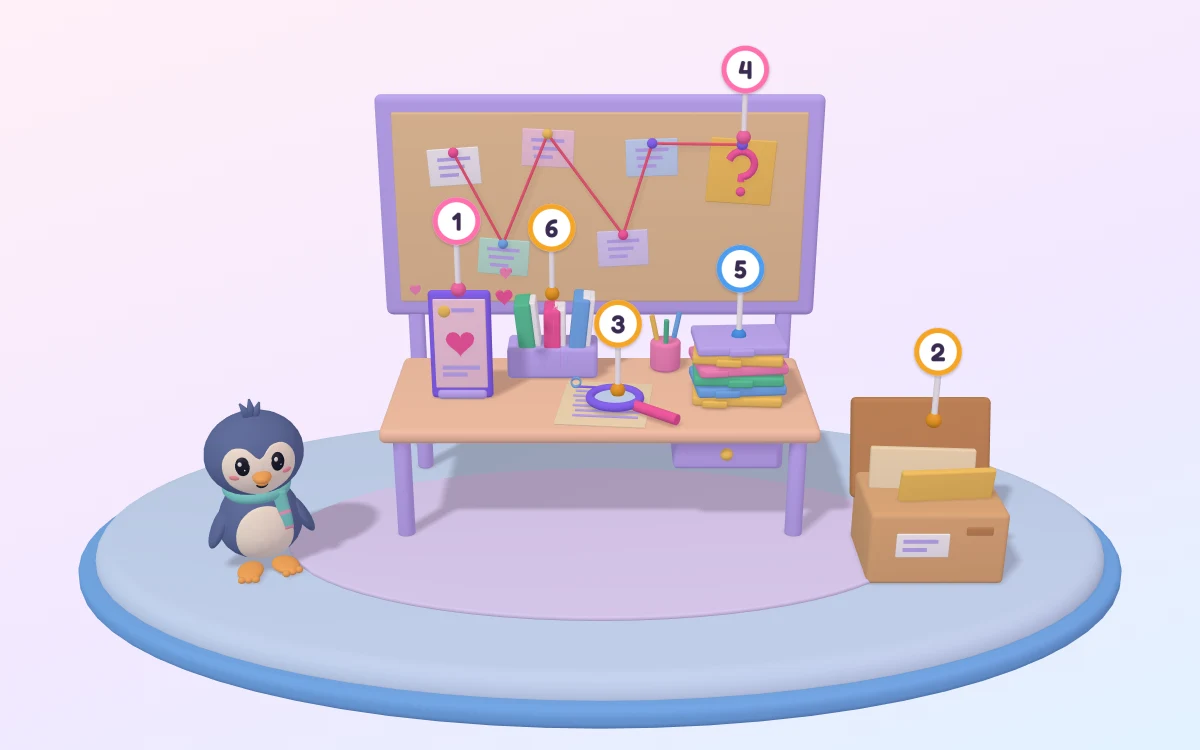
From viral post to the actual studies
Each pin is one step from the viral version of the claim to what the studies measured, colored by how strong the evidence is.
- Some evidence
- Limited evidence
- Unverified or untested
1. The viral versionEvidence: No paper named (unverified or untested)
A widely shared version comes from a 2015 TED talk. It credited the “Harvard Grant Study” with finding that professional success grows out of doing chores as a child, and said starting earlier is better. It did not name a paper.
2. Not Harvard studentsEvidence: Correlational, one cohort (limited evidence)
The claim most likely traces back to Vaillant and Vaillant (1981). It analyzed the Glueck Study's 456 men who grew up in inner-city Boston neighborhoods, not the Harvard graduates. The 724 often quoted is both groups combined.
3. Boyhood work, not choresEvidence: Correlational, not chores (limited evidence)
Raters scored how well each boy handled school-age work in general; the abstract doesn't say how much of it was housework. That capacity best predicted the men's mental health and relationships at 47, ahead of family social class, and also predicted success at work. Nobody was assigned chores.
4. The “start at age 3 or 4” claimEvidence: Not verified (unverified or untested)
Attributed to Marty Rossmann of the University of Minnesota. The earliest account is a September 2002 university summary describing 84 young adults; no journal article reports it, so its methods can't be checked. Treat it as unverified, not as a deadline age.
5. A study of nearly 10,000 childrenEvidence: Long-term, correlational (some evidence)
In 9,971 US children, those who did chores more often in kindergarten rated themselves as more competent and more satisfied with life in third grade (White and colleagues, 2019). Children who rarely did chores had 17% to 27% higher odds of scoring in the bottom fifth. Modest differences, from parent reports.
6. Thinking skills and self-controlEvidence: Mixed, correlational (limited evidence)
Self-care and family-care chores, not pet care, were linked to working memory and inhibition in a survey of 207 parents (Tepper and colleagues, 2022). But a study that followed 674 youth from age 10 to 16 found no link between chores and self-control (Damian and colleagues, 2020).
Did a Harvard study find kids who do chores are more successful?
A widely shared version comes from a 2015 TED talk by Julie Lythcott-Haims, a former Stanford dean of freshmen. She credited the “Harvard Grant Study” with finding that professional success grows out of doing chores as a child, and said starting earlier is better. She did not name a paper.
The Harvard Study of Adult Development is real and has followed two groups of men for over 80 years: the Grant Study, 268 Harvard graduates from the classes of 1939 to 1944, and the Glueck Study, 456 men who grew up in inner-city Boston neighborhoods. The claim most likely traces back to Vaillant and Vaillant (1981), the only Harvard Study analysis of boyhood work we found. It analyzed the second group, not the Harvard men.
- Design: longitudinal and correlational, following the men from about age 14 to 47; nobody was assigned chores.
- Measure: raters who didn't know how the men turned out scored how well each boy handled the school-age work Erik Erikson called “industry versus inferiority”. The abstract doesn't list what went into that score, and the paper is paywalled, so we couldn't check how much was housework.
- Result: of all the childhood factors weighed, a boy's capacity for school-age work best predicted the man's mental health and relationships at 47, ahead of his family's social class. It also predicted his success at work.
| What the viral version says | What the 1981 paper did |
|---|---|
| It studied Harvard students | It studied the 456 inner-city Boston men |
| It followed 724 people | 724 is both groups combined; this paper analyzed 456 |
| It looked at chores | It rated boyhood work broadly; the abstract doesn't say how much of that was chores |
| Starting earlier is better | The abstract says nothing about starting age |
| Chores lead to success | Correlational; one cohort of men who grew up in the 1930s and 1940s, with no girls and no modern replication we could find |
Is there a study saying kids should start chores at age 3?
A related claim holds that Marty Rossmann, a family-education professor at the University of Minnesota, found young adults did best if they started helping at home at age 3 or 4. The earliest account we found is a September 2002 university research summary, not a peer-reviewed paper. It describes 84 young adults from Diana Baumrind's study of Bay Area families.
This claim is widely shared, but we searched Crossref, PubMed and ERIC and found no journal article reporting it, so its methods can't be checked. Treat it as unverified, not as a deadline age.
What are the benefits of chores for kids? A study of nearly 10,000 children
In the largest study we found, White and colleagues (2019), pediatrics researchers at the University of Virginia, analyzed 9,971 US children from the Early Childhood Longitudinal Study, Kindergarten Class of 2010–11.
- Design: longitudinal and correlational.
- Chores: in kindergarten, parents reported how often their child did chores.
- Outcomes: in third grade, children rated their own competence with schoolwork, friendships and helping others, and their life satisfaction, and took reading, math and science tests.
- Adjusted for: sex, family income and parent education.
Kids who did chores more often in kindergarten rated themselves as more competent and more satisfied with life three years later. Compared with regular helpers, children who rarely did chores had 17% to 27% higher odds of scoring in the bottom fifth on those self-ratings. Doing any chores was also linked to better third-grade math, the only test score the abstract ties to chores.
These are modest differences based on parent reports, and we found no repeat in another cohort.
Do chores improve executive function?
Executive functions let kids hold instructions in mind (working memory), pause before acting (inhibition) and switch tasks. Tepper and colleagues (2022), at La Trobe University in Australia, asked whether chores track with them.
- Design: a cross-sectional online survey in mid-2020.
- Sample: 207 parents of children aged 5 to 13; about three in four lived in Australia.
- Measures: parents rated both chores and executive function. The chores questionnaire recorded how much help a child needed with each job, not how often they did it.
- Adjusted for: child age, gender and disability.
Self-care chores, such as making yourself a snack, and family-care chores that serve others, such as helping make a family meal, were each linked with better working memory and inhibition. Each explained only about 4% to 7% of the differences between children, and we found no replication yet. Pet care showed no link; the authors suggest that pouring food into a bowl may not demand much planning.
The authors say the direction of the link is unknown: chores might build these skills, or children who already plan well may be given more to do. La Trobe's own press release (June 14, 2022) was headlined “Children's chores improve brain function”, which goes further than a one-time snapshot can.
A newer cross-sectional study, not yet repeated as far as we know, adds a detail. Xia and colleagues (2025) tested 125 preschoolers, around age 4, on problem-solving tasks and asked parents about chores and how they help. More chore involvement went with better problem solving, and the link depended on parental scaffolding, how parents supported the child's thinking. In videos of 31 families, parents helped most early in a task, then stepped back, while staying warm.
What these studies can't tell us
The one long-term look at chores and self-control found no link. Damian and colleagues (2020) followed 674 Mexican-origin youth in California at ages 10, 12, 14 and 16. Kids reported which of 14 common chores they did, and they and their mothers rated the child's effortful control, a close relative of self-control. The two did not develop together. The chore measure counted types of jobs, not effort, and the authors note that tracking began at 10, so any earlier effect would be missed.
- Correlation, not cause. None of these studies assigned chores at random, and we found no randomized trial.
- Self-report. Parents or children reported the chores; in the Australian survey, the same parent rated both chores and skills.
- Other explanations. An organized household, warm parenting or a child's temperament could drive both helping and outcomes.
- Few adult outcomes. Only the 1981 study linked childhood work to adult outcomes, and it measured work broadly. Damian's team followed youth to 19 and linked self-control at 10, not chores, to less job stress and better job fit.
Do chores help child development? What it means at home
Possibly, but we found no study that tested it directly. The research is correlational, and the one study that tracked chores and self-control for years found no link. The best leads are multi-step jobs and help that is gradually withdrawn, but no study can promise results for a particular child.
Developmental psychologist Barbara Rogoff (2014) describes children in many Indigenous-heritage communities in the Americas learning by observing and pitching in to real family work. Alcalá and colleagues (2014) compared reports about children in two communities in Guadalajara, Mexico. Many 6- to 8-year-olds in the Indigenous-heritage one were described as taking on real family jobs, like cooking or minding siblings, unasked. Where families had long experience of Western-style schooling, children were reported to help less, seldom unasked, and spent more time in adult-managed activities. Two neighborhoods can't speak for whole cultures, and we couldn't check the sample size. These are different practices, not better or worse families, but they suggest being included in work that matters is part of how kids come to help. Motivation researchers make a similar case for feeling connected; see how to encourage intrinsic motivation in children.
| Kind of job | Examples | What studies found | Strength |
|---|---|---|---|
| Family care | Setting the table for everyone, helping cook | Linked to working memory and inhibition (Tepper and colleagues, 2022) | Limited: one snapshot survey |
| Self-care with steps | Making a snack, packing a school bag | Linked to working memory and inhibition (Tepper and colleagues, 2022) | Limited: one snapshot survey |
| Simple pet care | Feeding a pet | No link (Tepper and colleagues, 2022) | Limited: one study |
| Number of chore types | Any of 14 common jobs, ages 10–16 | No link with self-control (Damian and colleagues, 2020) | Moderate: longitudinal, one cohort |
One caution for reward charts: in a small lab study, 20-month-olds who got a toy for helping an adult later helped less than those praised or given nothing (Warneken and Tomasello, 2008). We think thanks and inclusion suit the youngest helpers, and charts suit routines older kids resist; we weigh the rewards evidence in do reward charts work?
For job ideas by age, see our age-appropriate chores guide. If jobs only happen after reminders, try chores without nagging; for 13 and up, see chores for teenagers. Or browse the chores for kids hub.
Try this at home
- Add one job that serves the whole family, such as setting the table for everyone.
- Pick jobs with a few steps. Making a snack takes more planning than pouring pet food.
- Teach it, then step back. Do the job together at first, then give a little less help each week. Example script: “How many people are eating tonight? So how many forks do we need?” Later: “The table is yours tonight. Call me if you get stuck.”
- Make it real work. Example script: “Dinner's ready on time because you set the table. Thanks for helping our family.”
- With toddlers, welcome help and say thanks. If a 2-year-old wants to carry napkins, let them, and skip the prize.
If a chart helps your family keep track
Star Chart Kids is one optional tool. Parents can add jobs a child tends to put off, such as packing a school bag, to a quest, choose which weekdays each task repeats, and create count badges such as “Set the table 20 times”. Kids tap a job done to earn stars, and the app doesn't take earned stars away as punishment. It's free and best for roughly ages 3 to 12: a parent creates a username and parent passcode, with no email or payment required. The research above is about how kids are included and taught, not about any particular chart.
This article is general information, not medical or developmental advice. If you have concerns about your child's attention, planning or self-control, talk with your pediatrician.
Frequently asked questions
Is there really a Harvard study that says kids who do chores are more successful?
Not quite. The claim most likely traces back to Vaillant and Vaillant (1981), from the Harvard Study of Adult Development. It followed 456 men who grew up in inner-city Boston, not Harvard students, and rated boyhood work broadly rather than testing chores on their own.
What are the benefits of chores for kids, according to research?
The findings are associations. In 9,971 US children, more frequent kindergarten chores went with higher self-rated competence in third grade, and doing any chores went with better math scores. A smaller survey linked self-care and family-care chores with working memory and inhibition. Neither shows that chores caused the differences.
Do chores help child development and executive function?
Possibly, but the evidence is thin. Two correlational studies linked chores with thinking skills, while a study that followed 674 youth from age 10 to 16 found no link with self-control. Jobs with several steps, taught with help you gradually withdraw, are the most plausible bets, though no trial has tested them.
Did the research say the earlier kids start chores, the better?
Not in any peer-reviewed study we could find. The “start at 3 or 4” claim is attributed to Marty Rossmann of the University of Minnesota, but the only account we found is a 2002 university summary, not a journal article. The 1981 Harvard paper's abstract says nothing about starting age.
Sources and further reading
- Natural History of Male Psychological Health, X: Work as a Predictor of Positive Mental Health (American Journal of Psychiatry (Vaillant & Vaillant, 1981))
- Harvard Second Generation Grant and Glueck Study (Harvard Study of Adult Development, Massachusetts General Hospital and Harvard Medical School)
- How to Raise Successful Kids — Without Over-Parenting (TED (Julie Lythcott-Haims, 2015))
- Involving Children in Household Tasks: Is It Worth the Effort? (University of Minnesota College of Education and Human Development, Research Works summary (September 2002; archived copy))
- Associations Between Household Chores and Childhood Self-Competency (Journal of Developmental & Behavioral Pediatrics (White, DeBoer & Scharf, 2019))
- Executive Functions and Household Chores: Does Engagement in Chores Predict Children's Cognition? (Australian Occupational Therapy Journal (Tepper, Howell & Bennett, 2022))
- Children's Chores Improve Brain Function (Neuroscience News, republishing La Trobe University's press release (June 14, 2022))
- The Relationship Between Involvement in Household Chores and Problem-Solving Abilities Among Preschool Children and the Moderating Role of Parental Scaffolding (Acta Psychologica (Xia, Chen, Hong, Liang, Cui & Wu, 2025))
- The Co-Development of Chores and Effortful Control Among Mexican-Origin Youth and Prospective Work Outcomes (Journal of Research in Personality (Damian, Atherton, Lawson & Robins, 2020))
- Learning by Observing and Pitching In to Family and Community Endeavors: An Orientation (Human Development (Rogoff, 2014))
- Children's Initiative in Contributions to Family Work in Indigenous-Heritage and Cosmopolitan Communities in Mexico (Human Development (Alcalá, Rogoff, Mejía-Arauz, Coppens & Dexter, 2014))
- Extrinsic Rewards Undermine Altruistic Tendencies in 20-Month-Olds (Developmental Psychology (Warneken & Tomasello, 2008))