
← All blog articles · Rewards & Motivation topic hub
Quick answer: Instead of saying good job on its own, try adding what your child actually did: "You kept turning the pieces until one fit." Plain "good job" isn't shown to harm kids, and adding a few specific words is a low-risk habit that fits the research, though no study we found tested exactly that swap. The evidence comes mostly from short experiments and a few studies of home praise, so treat it as a useful habit rather than a formula.
Key takeaways
- We found no study showing that an occasional "good job" harms children. The strongest warnings are about praising the child's fixed traits, like being smart.
- In a classic 1998 experiment with fifth graders, those praised for being smart wanted to keep going less after a failure than those praised for effort or told only that they did very well.
- In one home study of 53 families, more praise aimed at what toddlers did predicted stronger beliefs in growth at ages 7 to 8. That study coded "good job" itself as this kind of praise.
- Over-the-top praise and trait praise can backfire most for kids with low self-esteem.
- The effects are contested: a close replication with children mostly failed, and the original researchers dispute how to read it.
Is saying "good job" bad for kids?
Probably not, at least not on the evidence we could find. The best-known case against it is Alfie Kohn's 2001 essay in Young Children, which argues that routine praise manipulates kids, makes them dependent on approval, and takes over their own pleasure in what they did. It is a thoughtful argument, and it draws on research, but it is an essay rather than a test of the phrase. We did not find an experiment comparing plain "good job" with saying nothing at home.
The closest direct evidence points in a less dramatic direction. In a home-observation study led by Elizabeth Gunderson (2013), researchers classed "good job" and "good try" as process praise, because they target the child's action. Bare remarks like "very good" or "wow" went into a general category, which made up about 66% of the praise parents gave. So the category linked to later beliefs included "good job", though the phrase itself was never analyzed separately. A few more words simply tell a child what the "job" was.
A related contrast, label versus action, has been tested. Andrei Cimpian and colleagues (2007) ran a small puppet-play experiment with four-year-olds, and Shannon Zentall and Bradley Morris (2010) followed up with 135 kindergarteners, randomly assigned to one of five praise mixes. Being called a "good drawer" was the risky version; hearing "good job drawing" was the safer one. In the kindergarten study, more of the action-focused wording went with more motivation after failure scenarios, and even a little of the label-style praise reduced persistence. Vague praise did not look like the problem: when Morris and Zentall (2014) randomly assigned 95 children aged 5 and 6, an ambiguous "yea" supported persistence about as well as effort praise, and both beat trait praise. A high five produced the highest self-evaluations. That study had no no-praise group.
Praise effort, not intelligence? What the classic experiments found
Claudia Mueller and Carol Dweck's 1998 paper reports six studies of fifth graders. In Study 1, 128 children aged 10 to 12 solved a set of puzzle-like problems, one at a time with an experimenter. All of them were told they had done very well. Some were then told they must be smart, some that they must have worked hard, and the rest heard nothing extra. Everyone then got a much harder set and was told they had done poorly.
When children rated how much they wanted to keep working on the problems, on a scale from 1 to 6, the averages were 3.25 for the smart group, 4.53 for the effort group and 4.3 for the group told only that they did very well. The smart group differed from both others; the other two did not differ significantly from each other in this study, though effort praise beat the control on persistence in the paper's Study 3, and on enjoyment and later scores in Study 1. Asked what kind of problems they wanted next, 67% of the smart group chose ones that would make them look good, against 8% of the effort group, with the control group about evenly split.
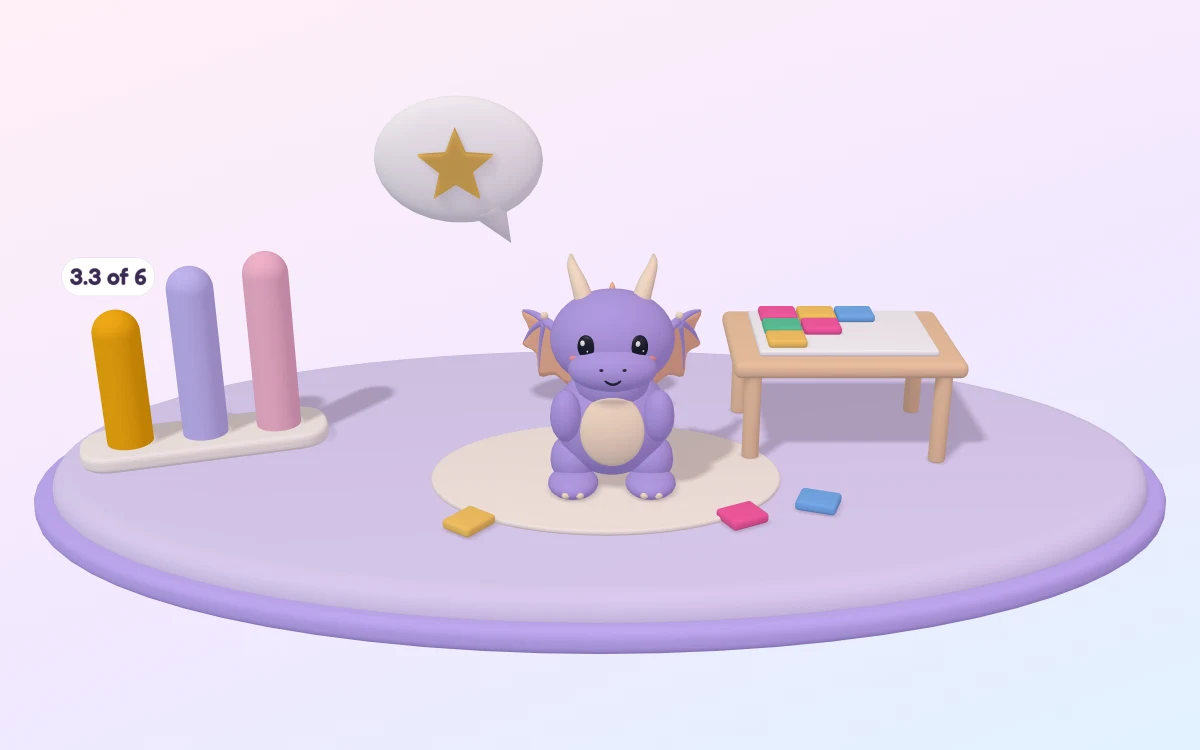
You must be smart · Wanted to keep going: 3.25 out of 6. Lowest of the three groups, and significantly lower than both others.
In that study, the smart label, not general positive feedback, separated the groups on wanting to continue. A 2012 study by Yvonne Skipper and Karen Douglas, using imagined scenarios with 145 British children aged 9 to 11, found a partly similar pattern. Person praise (about who the child is) produced the worst reactions after one failure, while process praise was no better than plain feedback on results. Person praise did not differ significantly from plain feedback on persistence, and after a second failure no groups differed.
Younger children have shown a similar pattern in some studies, but not all. Melissa Kamins and Dweck (1999) found more helpless responses after setbacks in role-play with 5- and 6-year-olds who had received person praise. Li Zhao and colleagues (2017) tested 300 preschoolers in eastern China; according to the Association for Psychological Science's summary, nearly 60% of those told they were smart peeked at a hidden card, compared with just over 40% of those told they had done well or praised not at all. But Jennifer Henderlong Corpus and Mark Lepper (2007) found that praise of all kinds, including "Good job on that one!", raised later classroom play with the puzzles compared with a neutral "OK", in a preschool study with 48 children observed at follow-up; immediate measures barely differed. In their fourth and fifth graders, the differences appeared mainly for girls.
Does everyday praise at home predict anything later?
Lab sessions last minutes, so Gunderson's team asked whether ordinary praise leaves any trace. They recorded 53 Chicago-area families for about 4.5 hours in total when children were 14, 26 and 38 months old. Parents weren't told praise was the focus. Children who had heard a larger share of process praise were more likely at ages 7 to 8 to believe that abilities can grow and to prefer challenges (r = .35, about 12% of the variation). A 2018 follow-up of the same children linked this to fourth-grade math and reading through those beliefs.
Two limits matter. This is correlational, in one small sample, so it cannot show that praise caused the difference. The total amount of praise did not explain the link, and neither did person praise, which did not predict later beliefs in that study. A 10-day study of mothers' daily reports by Eva Pomerantz and Sara Kempner (2013), with 120 children averaging 10 years old, found the reverse pattern: more person praise predicted more avoidance of challenge six months later, while process praise did not predict either outcome. One reasonable reading is that "good girl" said to a toddler and "you're so smart" said to a fifth grader are different things, as the Gunderson team suggested, but nobody has settled this.
Can you praise your child too much?
The research concern is less about how often you praise and more about what kind. Across several studies, Brummelman and colleagues (2014) found that adults tend to give extra-glowing praise to kids with low self-esteem. In an experiment, inflated praise ("incredibly" beautiful, rather than just beautiful) reduced challenge seeking in children with low self-esteem and increased it in those with high self-esteem. In a separate paper, person praise was linked to more shame after failure among 313 children averaging 10.4 years old, especially those with low self-esteem.
Jennifer Henderlong and Mark Lepper's 2002 review remains the most useful summary of how to praise a child. Praise tends to support motivation when it is sincere, points to things the child can control, leaves room for the child's own choices, avoids leaning on comparisons with others, and sets standards the child can reach. Age matters too: Jamie Amemiya and Ming-Te Wang (2018) argue that by adolescence, effort praise can come across as a hint that you think a child lacks ability. That is a theoretical review, but it is a good reason not to praise effort on something that was easy, or when the effort didn't work and the child needs a new strategy.
None of this means parents should cut back on warmth. In a meta-analysis of 154 parenting-program trials, Patty Leijten and colleagues (2019) found that programs teaching positive reinforcement, praise in particular, had stronger effects on disruptive behavior, though no technique was linked to stronger longer-term effects. That is a comparison across programs, and a separate review of 41 studies found mixed results for praise on compliance, while reprimands more consistently increased it (Owen and colleagues, 2012). For more on how praise fits with other reinforcers, see our positive reinforcement examples.
How strong is the evidence? The replication debate
This is where the confident advice online runs ahead of the data. Yue Li and Timothy Bates (2019) ran a close replication of Mueller and Dweck, plus two more experiments, with 624 children aged 9 to 13 in China. Their close replication found one barely significant result on later performance and none on the eight motivation and attribution measures. Their other experiments found no predicted effect. Yeager and Dweck (2020) reply that each study was underpowered and that pooling the three supports the original result. A smaller study of 108 vocational students by Jaap Glerum and colleagues (2019) also found no difference between the praise types. The disagreement remains open.
School growth-mindset lessons bear only indirectly on praise at home, and their meta-analyses disagree too: weak overall effects on achievement (Sisk and colleagues, 2018), a tiny effect (d = 0.05) that was not significant after correcting for possible publication bias, with larger effects among authors with a financial stake (Macnamara and Burgoyne, 2023), and d = 0.14 for targeted groups in well-run programs, with a wide expected range (Burnette and colleagues, 2023). We would not expect more from a change in wording alone, though that is our inference.
What to say instead of "good job"
These process praise examples are our own illustrations of the principles above, not scripts tested in the studies. Use your own words and only say what is true. You don't need to praise everything, either.
| Situation | Try saying | Why it fits |
|---|---|---|
| A toddler stacks blocks | "You put that big one on top!" / "Good job stacking!" | Names the action |
| A tricky puzzle or zipper | "You tried a different way when that one didn't fit." | Points to a strategy they control |
| A drawing | "You used so many blues in the sky. Tell me about it." | Notices, then lets them lead |
| A finished chore | "You got the table set before dinner. That helped all of us." | Says what they did and why it mattered |
| A good grade | "You practiced those spelling words all week. What helped most?" | Ties the result to a process |
| A hard try that failed | "That was a tough one. What could we try next?" | Skips empty praise and moves to strategy |
| Something easy for them | "Done! Want a harder one?" | Avoids overpraising easy success |
| A child proud of their work | "You look really proud of that. Which part do you like best?" | Leaves the judgment with them |
| Trying a new food | "You tried one bite even though it looked strange." | Names the brave part, not the child |
If this sounds like a lot to remember, it doesn't have to be. Motivation also depends on choice, skill and connection, which our guide to encouraging intrinsic motivation covers. Our rewards and motivation hub collects more, including what to do when kids won't do chores and reward charts.
Try this at home
- Keep saying "good job" if it comes naturally, and add one detail after it, for example: "Good job, you used two hands."
- Pick one word to retire for a week. "Smart" is the one with the most evidence behind the caution.
- Skip the superlatives when a child seems unsure of themselves. Say what you actually see.
- When something didn't work, skip "you tried so hard" on its own and add a next step. If your child often quits, see what to do when your child gives up easily.
- Ask one question sometimes instead of giving a verdict: "How did you figure that out?"
- Don't audit yourself. No study here suggests one phrase, on one day, makes much difference.
Where a star chart fits
A star or a level-up says a task got done; it can't say how. A sentence from you can do that part. If a task uses optional parent approval, that's a natural moment to name how your child handled it. Star Chart Kids is one optional tool: free, with no ads, loot boxes or streaks. A parent creates a username and parent passcode, with no email or payment required. Research on whether reward charts work has its own limits.
Frequently asked questions
What can I say instead of good job?
Add what your child did: "You kept trying different pieces" or "You set the table before dinner." You can also describe the effect on others, ask a question, or point to a next step. These are illustrations of research principles, not tested scripts.
Is saying good job bad for kids?
We found no study showing that it harms children. One home study even coded "good job" as process praise because it targets an action, and an experiment found a vague "yea" worked about as well as effort praise. The clearest research warnings concern praising fixed traits, such as being smart, and over-the-top praise.
What is the difference between process praise and person praise?
Person praise targets who the child is ("you're so smart"). Process praise targets what the child did ("you tried another way"). In short experiments, person praise often led to worse reactions after failure, though not every replication agrees and the original authors dispute the failed ones.
Can you praise your child too much?
The research points more to the type of praise than the amount. Inflated and person praise can backfire, especially for children with low self-esteem. Sincere, specific praise about things a child can control looks safer.
Should you praise effort instead of intelligence?
It looks safer than praising intelligence, if it's honest. In the classic 1998 experiment, praising effort left fifth graders more willing to persist than praising intelligence, but a later close replication mostly failed, though the original author disputes that reading. Add a strategy when effort alone isn't working.
Sources and further reading
- Praise for intelligence can undermine children's motivation and performance (Journal of Personality and Social Psychology (Mueller & Dweck, 1998))
- Person versus process praise and criticism: Implications for contingent self-worth and coping (Developmental Psychology (Kamins & Dweck, 1999))
- Subtle Linguistic Cues Affect Children's Motivation (Psychological Science (Cimpian, Arce, Markman & Dweck, 2007))
- "Good job, you're so smart": The effects of inconsistency of praise type on young children's motivation (Journal of Experimental Child Psychology (Zentall & Morris, 2010))
- High fives motivate: the effects of gestural and ambiguous verbal praise on motivation (Frontiers in Psychology (Morris & Zentall, 2014))
- Parent Praise to 1- to 3-Year-Olds Predicts Children's Motivational Frameworks 5 Years Later (Child Development (Gunderson et al., 2013))
- Parent praise to toddlers predicts fourth grade academic achievement via children's incremental mindsets (Developmental Psychology (Gunderson et al., 2018))
- Mothers' daily person and process praise: Implications for children's theory of intelligence and motivation (Developmental Psychology (Pomerantz & Kempner, 2013))
- Is no praise good praise? Effects of positive feedback on children's and university students' responses to subsequent failures (British Journal of Educational Psychology (Skipper & Douglas, 2012; online 2011))
- The Effects of Person Versus Performance Praise on Children's Motivation: Gender and age as moderating factors (Educational Psychology (Henderlong Corpus & Lepper, 2007))
- Praising Young Children for Being Smart Promotes Cheating (Psychological Science (Zhao, Heyman, Chen & Lee, 2017))
- Praising Kids' Smarts May Lead to Cheating (summary of Zhao et al., 2017) (Association for Psychological Science)
- "That's Not Just Beautiful, That's Incredibly Beautiful!": The adverse impact of inflated praise on children with low self-esteem (Psychological Science (Brummelman et al., 2014))
- On feeding those hungry for praise: Person praise backfires in children with low self-esteem (Journal of Experimental Psychology: General (Brummelman et al., 2014))
- The effects of praise on children's intrinsic motivation: A review and synthesis (Psychological Bulletin (Henderlong & Lepper, 2002))
- Why Effort Praise Can Backfire in Adolescence (Child Development Perspectives (Amemiya & Wang, 2018))
- Meta-Analyses: Key Parenting Program Components for Disruptive Child Behavior (Journal of the American Academy of Child & Adolescent Psychiatry (Leijten et al., 2019))
- The Effect of Praise, Positive Nonverbal Response, Reprimand, and Negative Nonverbal Response on Child Compliance: A Systematic Review (Clinical Child and Family Psychology Review (Owen, Slep & Heyman, 2012))
- You can't change your basic ability, but you work at things, and that's how we get hard things done: Testing the role of growth mindset on response to setbacks, educational attainment, and cognitive ability (Journal of Experimental Psychology: General (Li & Bates, 2019))
- The effects of praise for effort versus praise for intelligence on vocational education students (Educational Psychology (Glerum et al., 2019))
- What can be learned from growth mindset controversies? (American Psychologist (Yeager & Dweck, 2020))
- To What Extent and Under Which Circumstances Are Growth Mind-Sets Important to Academic Achievement? Two Meta-Analyses (Psychological Science (Sisk et al., 2018))
- Do growth mindset interventions impact students' academic achievement? A systematic review and meta-analysis with recommendations for best practices (Psychological Bulletin (Macnamara & Burgoyne, 2023))
- A systematic review and meta-analysis of growth mindset interventions: For whom, how, and why might such interventions work? (Psychological Bulletin (Burnette et al., 2023))
- Five Reasons to Stop Saying "Good Job!" (Young Children (Alfie Kohn, 2001; essay))