
← All blog articles · Kids’ Routines topic hub
Quick answer: Does screen time affect sleep in kids? On average, yes, a little. Large reviews find that children who use more screens, especially in the evening and in their bedroom, tend to go to bed later and sleep less. The size of the link is modest, most of the studies are surveys that can't prove cause and effect, and the trials that have tested changes found mixed results. So the evidence supports a sensible screens-off habit before bed. It doesn't support panic about every minute of screen use.
Key takeaways
- A 2015 systematic review of 67 studies found screen time linked to worse sleep, mostly shorter and later sleep, in 90% of them. The authors stressed that cause and effect were not confirmed.
- A 2016 meta-analysis of 125,198 school-age children found that using a portable device at bedtime was linked to about twice the odds of too little sleep. Simply having a device in the bedroom was linked to higher odds too.
- For children under 5, a 2020 review found the same direction of link, but rated the quality of the evidence very low.
- The trial evidence is mixed. Changing preschoolers' media content lowered parent-reported sleep problems in one trial. A strict two-week cut in family screen use in Denmark found no significant difference in EEG-measured sleep.
- A practical, low-cost step: devices out of the bedroom and screens off at least 30 minutes before bed, ideally the full hour the AAP's family advice suggests.
Does screen time before bed really affect kids' sleep?
The most-cited summary is a systematic review by Lauren Hale and Stanford Guan (2015, Sleep Medicine Reviews). They gathered 67 studies of school-aged children and adolescents published between 1999 and early 2014, covering TV, computers, video games and mobile devices. In 90% of the studies, more screen time went with worse sleep, mainly shorter sleep and a later bedtime. The authors were careful about what this meant: they listed the fact that a causal link was not confirmed as the first limitation, followed by measurement error in both screen use and sleep.
A year later, Ben Carter, Lauren Hale and colleagues (2016, JAMA Pediatrics) pooled 20 studies on portable devices such as phones and tablets in the sleep environment. Together the studies covered 125,198 children aged 6 to 19, with an average age of 14.5, so the sample leans toward teenagers. Children who used a device at bedtime had higher odds of too little sleep (odds ratio 2.17, or roughly 2.2 times the odds), poor sleep quality (1.46) and excessive daytime sleepiness (2.72). The surprising part: children who had a device in the bedroom at night but did not use it also had higher odds of too little sleep (1.79, or about 1.8 times the odds). All 20 studies were cross-sectional, a single snapshot in time, and the results varied a lot between studies.
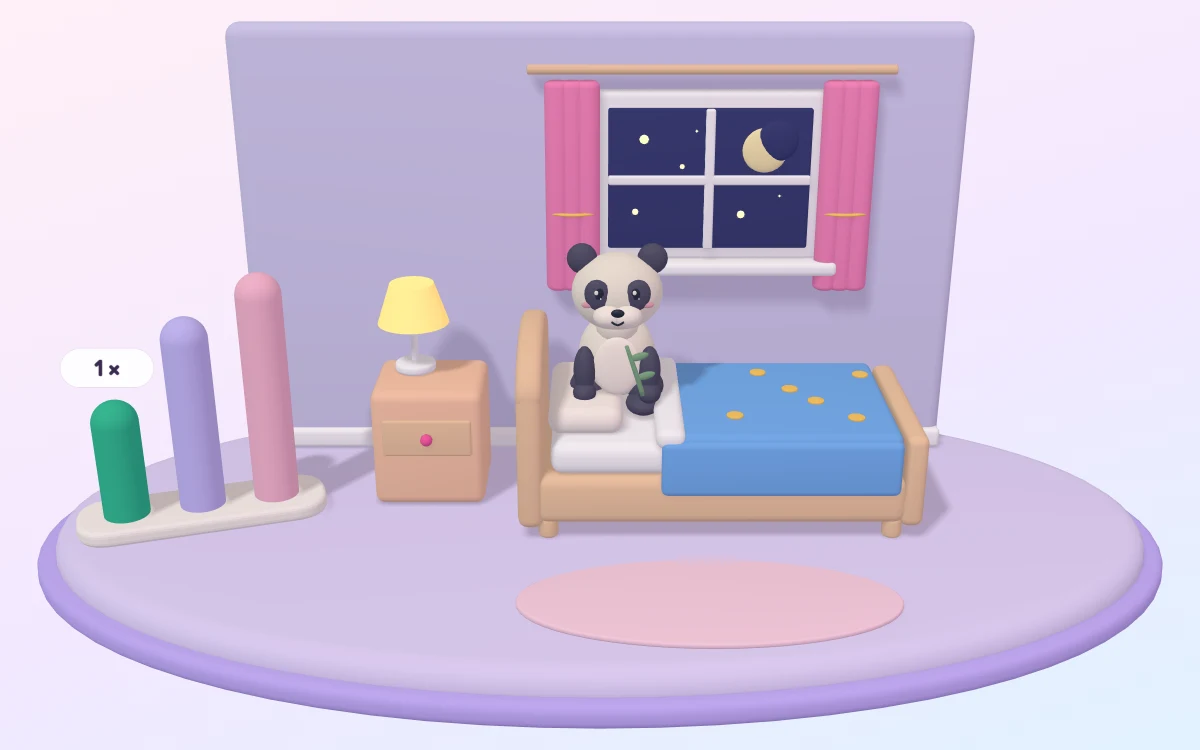
No device in bedroom · Odds of too little sleep: 1 (comparison group). The comparison group in each analysis.
What about toddlers and preschoolers?
Younger children have been studied less. Xanne Janssen and colleagues (2020, Sleep Medicine Reviews) reviewed 31 papers on screen time, activity and sleep in children under 5. Screen time was linked to poorer sleep in infants, toddlers and preschoolers. When the team pooled the numbers, the link held for infants and toddlers but not for preschoolers. They rated the overall quality of the evidence as very low, with the strongest evidence for daily and evening screen use in toddlers and preschoolers.
One detailed look at preschoolers comes from Michelle Garrison, Kimberly Liekweg and Dimitri Christakis (2011, Pediatrics). Parents of 3- to 5-year-olds kept media diaries. On average the children had 72.9 minutes of screen media a day, 14.1 minutes of it after 7 pm. Each extra hour of evening media went with a higher sleep-problem score, and so did violent content during the day. Nonviolent daytime media showed no such link. Children with a TV in the bedroom used more media and were more likely to have a sleep problem. This was a survey and diary study, so it shows patterns, not causes.
Why screens might delay sleep: time, content and light
A 2018 review led by Lauren Hale sets out three main explanations. Each one points to a different fix.
| Explanation | What it means | Strength of the evidence in children |
|---|---|---|
| Time displacement | Screen time pushes bedtime later, so sleep gets shorter. | Consistent with the survey data; simplest to act on. |
| Exciting or scary content | Stimulating or violent content makes it harder to settle. | Supported in preschoolers by the Garrison studies, including a randomized trial. |
| Screen light | Evening light suppresses melatonin and shifts the body clock later. | Clear in lab studies with bright light; less clear for ordinary tablet use. |
The light explanation, often framed as blue light and kids' sleep, gets the most attention, so it helps to know what was actually tested. In a study of adults, Anne-Marie Chang and colleagues (2014, PNAS) compared reading on a light-emitting e-reader with reading a printed book before bed. After the e-reader, people took longer to fall asleep, made less melatonin, had a later body clock and felt less alert the next morning. Those were adults, not children. In preschoolers, Lameese Akacem, Kenneth Wright and Monique LeBourgeois (2018) exposed 10 healthy children, about 4 years old on average, to an hour of bright light before bedtime. Their melatonin dropped by 87.6% and stayed low after the light was switched off. Young children may be quite sensitive to evening light, but that study used a bright light, not a screen, and only 10 children.
What the trials found
Surveys can't rule out the reverse story: children who already sleep poorly may reach for a screen when they can't sleep. Randomized trials help here, and there are a few.
Garrison and Christakis (2012, Pediatrics) randomly assigned families of 565 children aged 3 to 5 to a healthy-media program or to a comparison group. The program did not mainly cut screen time. Through a home visit and follow-up phone calls over 6 months, it helped families swap violent or age-inappropriate shows for educational and prosocial ones. Children in the program had lower odds of any sleep problem at follow-up (odds ratio 0.36), with a hint that the effect faded over time. Sleep was reported by parents rather than measured directly.
A Danish cluster-randomized trial led by Jesper Pedersen (2022, JAMA Pediatrics) went further on time. It assigned 89 families, with 181 children averaging about 9 years old, either to cut household leisure screen use to 3 hours a week or less for 2 weeks, or to carry on as usual. Children in the screen-cut families spent about 45.8 more minutes a day in leisure non-sedentary activity (standing or moving). Sleep was measured with a single-channel EEG, and it showed no significant differences between the groups. Two weeks is short, and the parents were recruited because they reported more than 2.4 hours a day of leisure screen use, but it is a useful check on the idea that cutting screens quickly fixes sleep.
What the research does not show
- It doesn't show that screens are the main driver of children's sleep. In a preregistered analysis of 50,212 US children from a 2016 national survey, Andrew Przybylski (2019, Journal of Pediatrics) found that each hour of screen time went with 3 to 8 fewer minutes of sleep a night. Screen time explained less than 1.9% of the variation in sleep, and family and household factors mattered more. Children whose families met AAP screen-time guidance slept about 20 to 26 minutes more.
- It doesn't settle cause and effect. Most of the data are cross-sectional surveys with parent- or self-reported screen time and sleep.
- It doesn't prove that "night mode" fixes the problem. Hale's 2018 review cites an adolescent study that compared an hour of bedtime tablet use under different light settings and found minimal differences in sleep, though the same review notes that longer bright screen use (1.5 to 5 hours) has raised alertness before sleep. Time and content may matter as much as color.
- It doesn't give a safe number of minutes. The reviews describe direction and rough size, not a threshold that works for all kids.
The 2024 National Sleep Foundation consensus statement, led by Lauren Hartstein and Lauren Hale, is a useful summary of where experts stand. A 16-person panel reviewed experimental studies and agreed that, in general, screen use impairs sleep health in children and adolescents, that the content of screen use before sleep matters, and that behavioral strategies may reduce the harm. Screen light is not among its conclusions: the panel found minimal published evidence that light from screens before sleep affects children's sleep, and blue-light filters showed only minimal improvements in sleep.
How long before bed should kids stop screen time?
Hale's 2018 review summarizes the AAP's endorsement of American Academy of Sleep Medicine guidance: no screen devices in children's bedrooms, and screens turned off 30 minutes before bedtime. The AAP's own family advice on HealthyChildren.org goes further: all screens off at least an hour before bedtime. The same review notes that limiting screens in the 30 to 60 minutes before bed may bring modest benefits for lights-out time, sleep quality and sleep length. "Modest" is the honest word. A screens-off window is cheap and low-risk, which makes it worth trying even though the evidence is not strong.
If you want age-by-age sleep targets, see our bedtime by age guide. For a step-by-step evening, the bedtime routine chart shows where a screens-off step can sit, and our research summary on routines covers what consistent routines do and don't do.
Try this at home
- Pick a screens-off time. Start with at least 30 minutes before lights-out and work toward the AAP's full hour if it goes well. An illustrative example: lights-out at 8:00, screens off at 7:30.
- Give devices a bedtime too. Charge phones and tablets outside the bedroom overnight. In the 2016 meta-analysis, even unused devices in the room were linked to shorter sleep.
- Watch what is on, not just how long. Choose calm, age-appropriate shows in the evening and leave fast-paced, scary or violent content for earlier in the day, or skip it.
- Fill the gap. Replace the screen slot with something your child likes: a bath, a book, drawing or a quiet chat. A routine is easier to keep when it adds something, not only removes it.
- Look at the bigger picture. Regular wake-up times, daytime activity and outdoor play matter for sleep too. In the under-5 review, physical activity and outdoor play were linked to better sleep in toddlers and preschoolers.
- Keep it calm. If a show runs late now and then, that's fine. The research is about habits over weeks, not single nights.
This article is general information, not medical advice. If your child snores, has trouble breathing during sleep, is very sleepy in the day, or has ongoing trouble falling or staying asleep, talk with your pediatrician.
Make "screens off" a step in the evening
If a visual checklist helps, Star Chart Kids is one optional tool: a parent can add "screens off" and "tablet on the charger" as steps in the Bedtime quest, and the quest resets each day. It's free and best for ages 3–12; a parent creates a username and parent passcode (no email or payment required), and there are no ads, loot boxes or streaks. A paper chart on the fridge works just as well.
For more on evenings and routines, see our kids' routines hub, our guide to screen time rewards for kids, and the research on how long it takes a child to form a habit.
Frequently asked questions
Does screen time affect sleep in kids?
On average, yes, modestly. A 2015 review found screen time linked to worse sleep, mostly shorter or later sleep, in 90% of 67 studies, but most studies were surveys that cannot prove cause and effect. One large 2019 analysis found each hour of screen time went with 3 to 8 fewer minutes of sleep.
How long before bed should kids stop screen time?
The AAP's family advice is to turn off all screens at least an hour before bedtime, and AAP-endorsed sleep guidance also says no screen devices in the bedroom. A 2018 research review suggests that limiting screens in the 30 to 60 minutes before bed may bring modest benefits for sleep.
Does screen time affect sleep in toddlers?
A 2020 review of 31 papers on children under 5 found screen time linked to poorer sleep in infants, toddlers and preschoolers, with the strongest evidence for daily and evening screen use. The reviewers rated the quality of that evidence as very low.
Is it the blue light from screens that hurts sleep?
Light is one possible reason. Lab studies show evening light suppresses melatonin, including in preschoolers exposed to bright light. Screen time also pushes bedtime later, and exciting content can make it harder to settle, so night-mode settings alone may not fix the problem.
Does cutting screen time improve kids' sleep?
The trials are mixed. Swapping violent shows for educational ones lowered parent-reported sleep problems in preschoolers in one trial. A strict two-week cut in family screen use in Denmark did not change EEG-measured sleep.
Sources and further reading
- Screen time and sleep among school-aged children and adolescents: A systematic literature review (Sleep Medicine Reviews (Hale & Guan, 2015))
- Association Between Portable Screen-Based Media Device Access or Use and Sleep Outcomes: A Systematic Review and Meta-analysis (JAMA Pediatrics (Carter, Rees, Hale, Bhattacharjee & Paradkar, 2016))
- Associations of screen time, sedentary time and physical activity with sleep in under 5s: A systematic review and meta-analysis (Sleep Medicine Reviews (Janssen et al., 2020))
- Media Use and Child Sleep: The Impact of Content, Timing, and Environment (Pediatrics (Garrison, Liekweg & Christakis, 2011))
- The Impact of a Healthy Media Use Intervention on Sleep in Preschool Children (Pediatrics (Garrison & Christakis, 2012))
- Youth Screen Media Habits and Sleep: Sleep-Friendly Screen Behavior Recommendations for Clinicians, Educators, and Parents (Child and Adolescent Psychiatric Clinics of North America (Hale, Kirschen, LeBourgeois, Gradisar, Garrison et al., 2018))
- Healthy Sleep Habits: How Many Hours Does Your Child Need? (HealthyChildren.org, American Academy of Pediatrics)
- Evening use of light-emitting eReaders negatively affects sleep, circadian timing, and next-morning alertness (PNAS (Chang, Aeschbach, Duffy & Czeisler, 2014))
- Sensitivity of the circadian system to evening bright light in preschool-age children (Physiological Reports (Akacem, Wright & LeBourgeois, 2018))
- Effects of Limiting Recreational Screen Media Use on Physical Activity and Sleep in Families With Children: A Cluster Randomized Clinical Trial (JAMA Pediatrics (Pedersen et al., 2022))
- Digital Screen Time and Pediatric Sleep: Evidence from a Preregistered Cohort Study (The Journal of Pediatrics (Przybylski, 2019))
- The impact of screen use on sleep health across the lifespan: A National Sleep Foundation consensus statement (Sleep Health (Hartstein et al., 2024))